

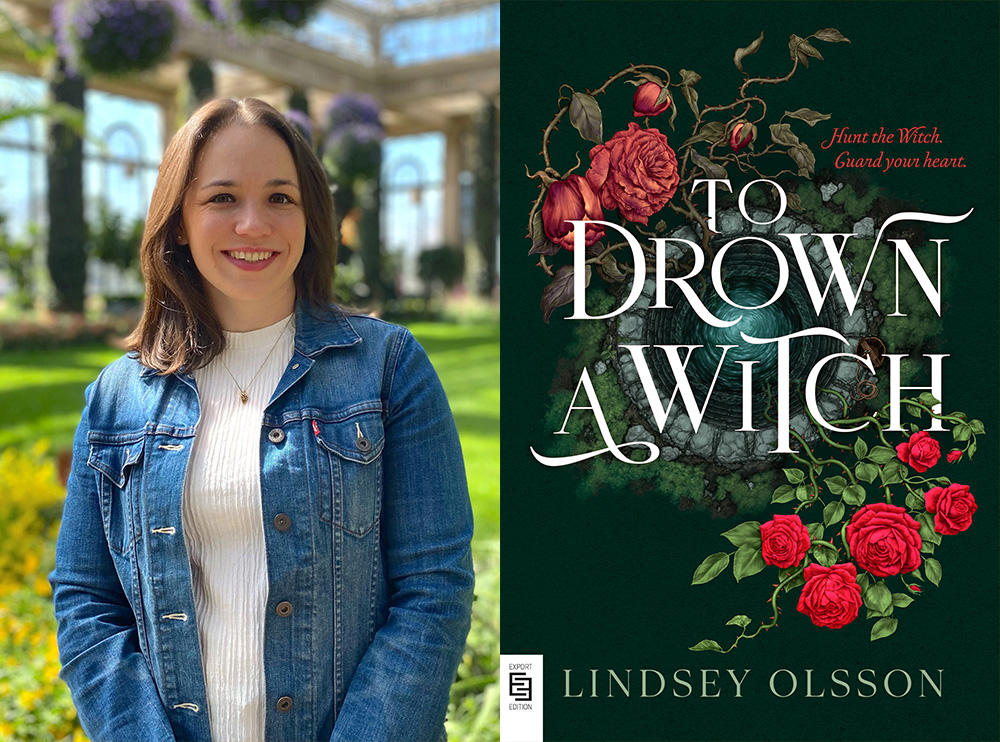
Guest post written by To Drown A Witch author Lindsey Olsson
Lindsey Olsson has been dreaming up stories since she first learned to write. After studying creative writing at Elon University, she went on to receive a MFA in writing for children and young adults from Hamline University. When she isn’t covering the walls of her home with book ideas, she can be found skiing and snowboarding, climbing rock walls, or adventuring alongside her husband. She has yet to say no when offered a doughnut . . . or a dozen. To Drown a Witch is her debut novel. Find her online at LindseyOlsson.com or follow her on Instagram @LindseyOlssonAuthor.
About To Drown A Witch: A criminal and a royal guard are drawn into the hunt for a dangerous witch—and an unexpected romance—in this YA enemies-to-lovers romantasy, the first in a duology. Perfect for fans of Heartless Hunter. Released July 14th 2026.
Is my novel, TO DROWN A WITCH, part of a trilogy? No, it’s a duology. But it is considered young adult romantasy. As a genre, romantasy hasn’t been around for very long. The mashup of fantasy and romance as a term only started getting thrown about five or so years ago. Before that books had to be either fantasy or romance and anything in between had to choose a side. Growing up, I read my way through plenty of the young adult fantasy section at bookstores, but, most often, I gravitated towards the novels that walked the line between romance and fantasy. As a result, I think I can safely say if the below novels were published today instead of 15+ years ago (wow!) they would have been dubbed young adult romantasy.

The Darkest Powers Trilogy by Kelley Armstrong (THE SUMMONING, The AWAKENING, and The RECKONING)
Starting off strong with a trilogy that contains three beloved tropes: forced proximity, the love triangle, and enemies to lovers. Although, I would personally classify the relationship between Chloe and Derek more as haters to lovers, but let’s not get too technical here. While set in a version of our world, the fantasy elements—werewolves, sorcerers, necromancers, and demons abound—are woven throughout the novel, making it very clear why this was labeled YA fantasy back in the day. However, alongside the mystery and magic, there is a strong romance plot line (I did mention a love triangle) with the main character, Chloe, torn between two brothers. With Chloe forced to share a home with both brothers, whilst trying to figure out her own powers, I’d say the romance and fantasy plots of the story share equal weight which, today, would land this series squarely within the romantasy genre.

The Starcrossed Trilogy by Josephine Angelini (STARCROSSED, DREAMLESS, and GODDESS)
Now the romance in this YA trilogy is strong and, unlike in the Darkest Powers trilogy, this story contains true enemies to lovers with its two lovers Helen and Lucas literally starting off trying to kill each other. And I do mean kill as in dead. It takes every ounce of their self control not to pummel the other person whenever they lay eyes on each other. However, I have to say (sans spoilers), their progression into lovers is not typical of today’s enemies to lovers tropes. Still, romance blossoms between the two all whilst Helen learns of her unique, fantastical heritage and her emerging powers. Although there is a good deal of time spent exploring the fantasy aspects of the novel, the romance in it is impossible to ignore. And you know what that means—if published today no doubt about it, the world would have labeled this trilogy romantasy.

The Hereafter Trilogy by Tara Hudson (HEREAFTER, ARISE, and ELEGY).
It feels a little on the nose to say this trilogy would be considered romantasy today. The story of a ghost girl and the boy she rescues from drowning who, it turns out, is the only person alive who can see her? I’m a little surprised this series didn’t jumpstart the romantasy genre 15 years ago. The romance is easily one of the strongest parts of the series. Were it not for the fact that the main character is dead, this series might have been grouped in with regular YA romances. But the main character, Amelia, is a ghost, and, throughout the series, she and her lover, Joshua, encounter problems of a far more fantastical nature compared to those of high school lovers in contemporary romances. So, again, how was this not classified as romantasy sooner?

The Paranormalcy Trilogy by Kiersten White (PARANORMALCY, SUPERNATURALLY, and ENDLESSLY).
I read most of these books when I was a teenager (or close to it), but the Paranormalcy trilogy is one I keep coming back to. I’ve reread this series a couple of times, most recently around seven years ago. With a whole slew of fantastical creatures hiding in plain sight, I just find it so much fun! That said, this series is a little less romance heavy compared to some of the other trilogies I’ve added to this list. But that doesn’t mean I don’t still think it belongs in the romantasy genre. In fact, I would go so far as to say the story doesn’t really get going until the main character, Evie, meets her love interest. That’s right, the love interest actually sparks the plot (or at least gets Evie to start asking all the questions she probably should have been asking her whole life). While the romance isn’t as prevalent throughout the entire series, there are still parts of the story that can’t progress without the romance between Evie and Lend. And you know what that means: with a solid mix of fantasy and romance this trilogy would have to be part of the romantasy genre today.

The Syrena Legacy Trilogy by Anna Banks (OF POSEIDON, OF TRITON, and OF NEPTUNE)
A trilogy with romance and mermaids? What more could you want in a series? As anyone close to me will tell you, I have a teensy, tiny, little obsession with mermaids. I definitely don’t have mermaid bookends or mermaid art or mermaid towels or mermaid mugs, and there is no way I have mermaid salt and pepper shakers, but I do love a good mermaid story and, for me, the Syrena Legacy scratched that itch. While the fantasy elements of this trilogy speak for themselves, the romance between the two main characters, Emma and Galen, is more than evident—their connection a driving force throughout the novels. And, similar to TO DROWN A WITCH, the story is told in the alternating POVs of two lovers (more interestingly those POVs switch between first person and third person). All of this lends this series to being labeled romantasy, even if the genre didn’t exist back then.
After reading through my list of YA romantasy trilogies, can you tell I’m feeling a bit nostalgic for these books? Do you have any sweet, romantic fantasy—eh hem, romantasy—novels you recommend? And while I do recommend you read TO DROWN A WITCH, my book is definitely not sweet. But it is exciting, romantic, and chock-full of dangerous magic which is why the powers that be labeled it romantasy. So, maybe when you’re done reading through the five trilogies listed here and are in need of a YA romantasy that’s a bit darker, you’ll pick up TO DROWN A WITCH.