
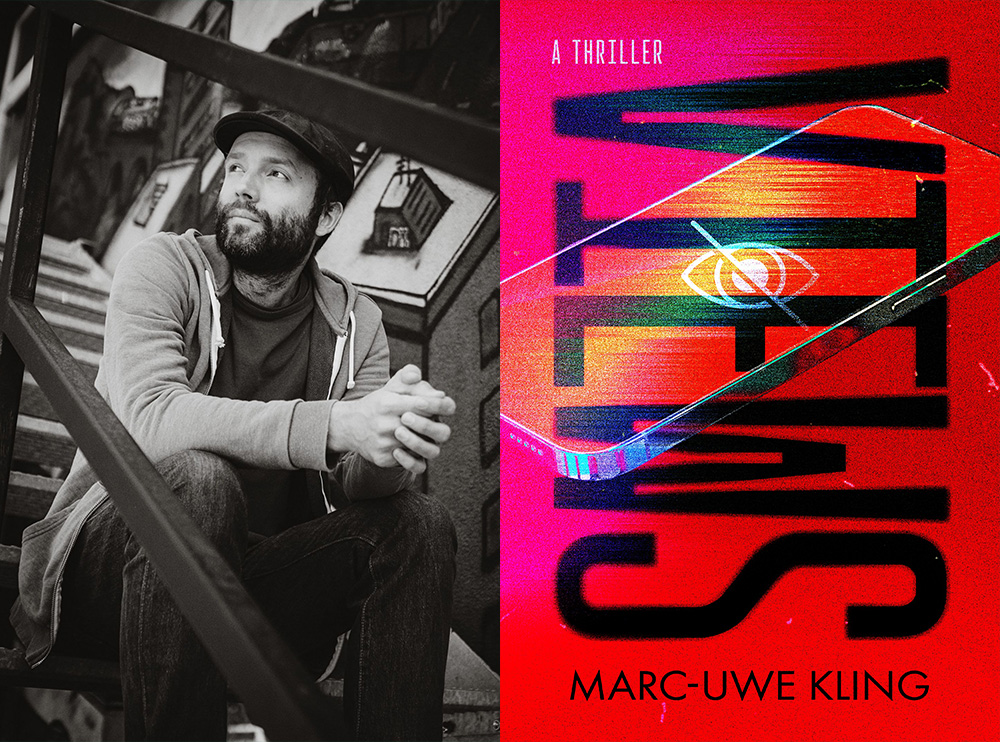
We chat with author Marc-Uwe Kling about Views, which is a compulsive thriller that explores the toxic relationship between technology and humanity, and the fallout after unthinkable lines are crossed.
Hi, Marc-Uwe! Can you tell our readers a bit about yourself?
I’m a writer from Berlin. I make up stories, podcasts, songs, children’s books, dystopias, and occasionally trouble. Some people know me because of a communist kangaroo, who shares my flat. Others because I keep warning them about the future in funny ways (QualityLand).
When did you first discover your love for writing and stories?
Pretty early. As a kid I loved books because they allowed you to disappear into another world without having to pack a suitcase. Later I realized writing lets you build those worlds yourself. Which is basically playing with Lego, except with existential dread.
Quick lightning round! Tell us:
- The first book you ever remember reading: Probably something with pirates or dinosaurs. Or pirate dinosaurs. Memory is unreliable. Maybe something from Astrid Lindgren.
- The one that made you want to become an author: Puh so many. I love Kurt Vonnegut. He showed me that books could be smart, absurd, philosophical, and hilarious at the same time.
- The one that you can’t stop thinking about: 1984 by George Orwell. Unfortunately, it keeps getting updated by reality.
Your latest novel, Views, is out now! If you could only describe it in five words, what would they be?
Algorithms. Fear. Rage. Attention. Collapse.
What can readers expect?
A fast-paced thriller about digital outrage, manipulation, and the terrifying speed at which modern societies lose their minds online. Also: suspense, uncomfortable questions, and hopefully at least a few moments where readers laugh before realizing they probably shouldn’t.
Where did the inspiration for Views come from?
Mostly from observing the internet for too long. Social media platforms have become giant emotional amplification machines. I was interested in what happens when outrage becomes more profitable than truth and when people can no longer distinguish between reality, narrative, and performance.
Were there any moments or characters you really enjoyed writing or exploring?
I always enjoy writing the little moments the most. Interactions between the protagonist and her daughter. Office chatter. And of course the twists. I love the twists.

Did you face any challenges whilst writing? How did you overcome them?
The biggest challenge was keeping the story up to date. Technology and public discourse evolve so quickly that a dystopian story constantly risks becoming documentary.
What’s next for you?
I’m working on several projects simultaneously, which is either creatively productive or a symptom of complete mental disorganization. Possibly both.
Lastly, what books are you looking forward to picking up? Any you’ve read so far this year that you’ve enjoyed?
I’m always interested in speculative fiction that explores where technology and society are heading. Preferably books that are clever enough to scare me a little.