


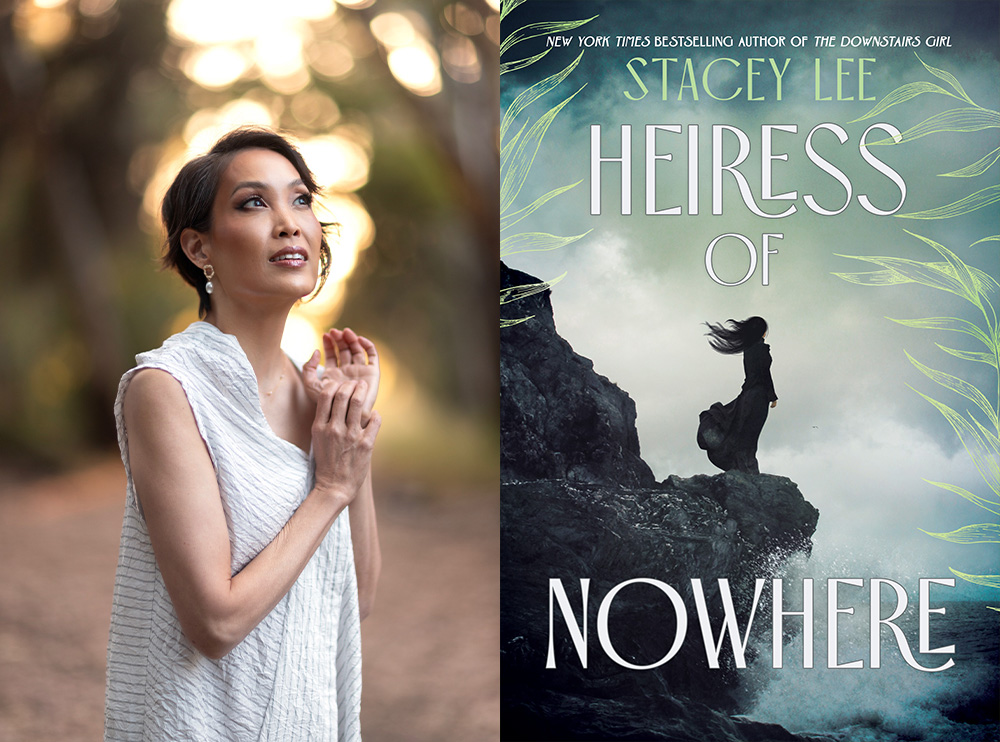
Guest post written by Heiress of Nowhere author Stacey Lee
Stacey Lee is the New York Times bestselling author of historical young adult fiction, including The Downstairs Girl, a Reese’s Book Pick; Luck of the Titanic, which received five starred reviews; and Outrun the Moon, winner of the Asian/Pacific Award for Literature. A native of southern California and fourth-generation Chinese American, she is a founder of the We Need Diverse Books movement and writes stories for all kids (even the ones who look like adults).
About Heiress of Nowhere: An orphan races to uncover a killer—who may have come from the sea—when she and her beloved orcas fall under suspicion in this “atmospheric…beguiling” (Publishers Weekly, starred review) historical gothic mystery from the New York Times bestselling author of The Downstairs Girl, Stacey Lee. Out March 17th 2026!
What do The Lion, the Witch and the Wardrobe, The Inheritance Games, and Saltburn have in common?
At first glance, very little: one is a classic portal fantasy about children discovering a magical world through a wardrobe, another is a puzzle-filled thriller about billionaire intrigue, and the third a dark drama about a scholarship student drawn into the orbit of extreme wealth.
Yet beneath their very different settings lies the same narrative engine: inheritance.
Again and again, we return to stories where someone unexpected enters a world of power they were never meant to access. Sometimes the protagonist is literally named an heir; sometimes they stumble into privilege through coincidence or proximity. Either way, someone who once lived on the margins suddenly finds themselves at the center.
It’s tempting to assume the appeal of these stories lies in the fantasy of sudden riches. But the real tension lies somewhere deeper: the question of belonging.
When someone unexpected inherits power, the same society that once ignored them now watches closely—questioning their legitimacy and their right to be there at all.
In The Inheritance Games, Avery Grambs doesn’t simply receive a fortune—she inherits a mansion full of people who believe the money should have been theirs. Every room holds a puzzle, and every relationship becomes a test.
In Saltburn, Oliver Quick slips into the glittering world of a wealthy family’s country estate. What begins as fascination with privilege slowly exposes the tensions beneath it.
Even The Lion, the Witch and the Wardrobe carries this dynamic beneath its fairy-tale surface. The Pevensie children arrive in Narnia as outsiders, yet prophecy names them rulers. Their presence reshapes the fate of the land.
In story after story, inheritance doesn’t simply change a character’s fortune. It forces them to confront who they are—and whether they belong in the world they’ve entered.
After writing nine novels—many of them about characters navigating power and identity—I’ve come to believe that this question of belonging is what makes inheritance stories endure.
In Heiress of Nowhere, Lucy Nowhere has spent her life on the outside looking in. She is used to being overlooked. Then a sudden inheritance places her at the center of a world that had always kept her at its edges.

The shift is immediate and disorienting. Lucy is a teenager from the servant class, suddenly expected to fill the place of the island’s most powerful figure. The company depends on the steady confidence of its charismatic founder. A disinherited nephew still circles the estate. The business advisors distrust her. The employees whisper about a “maid” inheriting a kingdom. And somewhere on the island, a killer is still at large.
Inheritance, in other words, doesn’t settle the question of belonging.
It intensifies it.
For Lucy, the inheritance becomes a moment of decision: she could retreat into the shadows she knows so well, leave the island, begin a new life at university—or step into the powerful role she’s been given.
And that’s why stories about unexpected heirs endure. The fortune may bring someone into the spotlight—but the real tension lies in what happens next, when the world begins to question whether they should be there at all.
Belonging isn’t something you inherit.
It’s something you choose.