


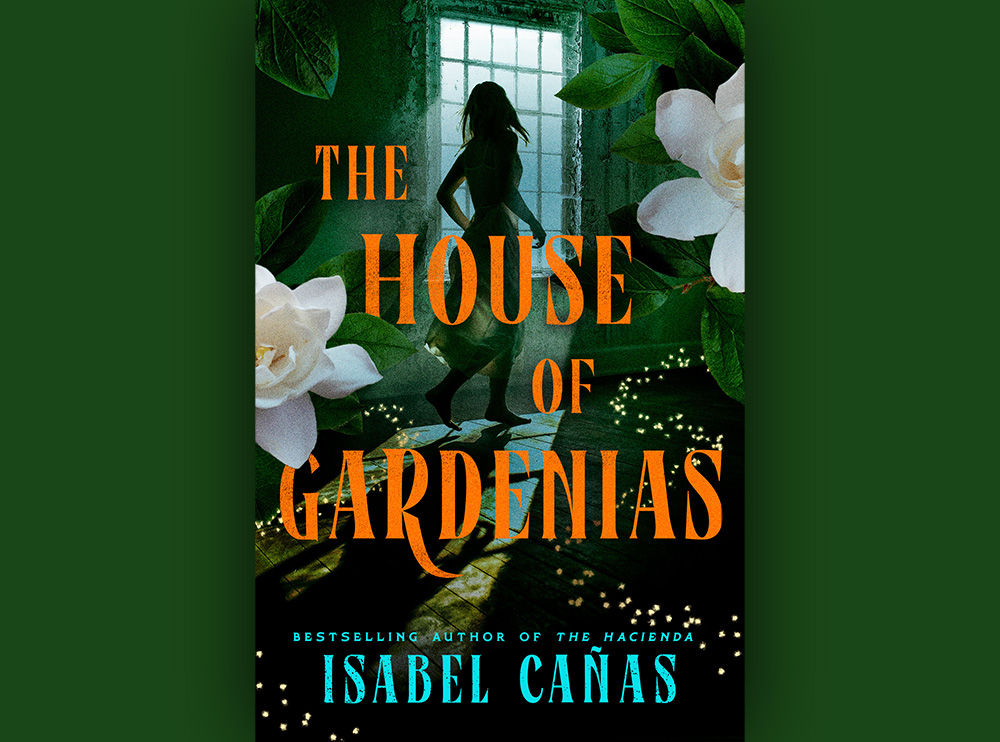
A stunning young adult debut from gothic master Isabel Cañas, bestselling author of The Hacienda, Vampires of El Norte, and The Possession of Alba Díaz.
Intrigued? Read on to discover the synopsis and an excerpt from The House of Gardenias by Isabel Cañas, which releases on September 29th 2026.
Growing up in a city wracked by political violence and a home where she’s more likely to receive a beating than a meal, Minerva Treviño’s cowardice has kept her alive for sixteen years. But even she has a limit. Hungry and desperate, she musters enough courage to run away and take a job as lady’s maid to a wealthy widow who supports the deposed viceroy.
Minerva is happy serving Encarnación del Valle. She has food in her belly and the safety of a warm house lit by magical chispa. Why should she care who runs the country or how her employer affords the magic?
When the viceroy sweeps back into power, Minerva retreats with her gleeful employer to the family’s mountainside stronghold to wait out the inevitable rebel slaughter. At la Casa de las Gardenias, Minerva faces new threats in the haughty servants and cruel, scheming del Valles.
But the living residents of the house are the least of her worries. As Minerva quickly discovers, the ancient estate is home to forces far older and more bloodthirsty than anything she could have imagined.
EXCERPT
CHAPTER 7
MINERVA
THE AROMA OF GARDENIAS ROSE FROM THE BUSHES like the steam from Señora Encarnación’s bath, so thick on the garden’s air I was half certain I should be able to see it. It slipped close to my skin, cloying and overcurious. Intrusive. Suffocating. Invasive. The air tasted different this high above the valley, still wet with mist at late morning. It felt as if the deeper I breathed, the more I was drowning.
Octaviana, Señora Encarnación’s middle-aged niece, inhaled deeply through her nose. The jeweled brooch at her throat glinted as it rose and fell.
“The House of Gardenias. It’s good to be back,” she said softly, as if to herself. To me, she snapped: “Hurry up.”
I pushed Señora Encarnación’s wheeled chair over uneven, mossy cobbles to the enormous double doors of the mansion, my arms and upper back burning from the effort.
La Casa de las Gardenias.
A house so large and imposing that Casa Azafrán could fit comfortably within its four walls. The stronghold of the del Valle family.
Where we will be safe, Octaviana wrote in the letter delivered to Casa Azafrán the day of the coup. Safe from the civil war that surged like a flood through the valley below.
But for a brief moment, an eerie sensation overwhelmed me: the awareness that I was a fly balancing on a thread of a spider’s web.
“Come along, Minerva,” Señora Encarnación chirped. Ever since the carriage pulled into the drive of Casa Azafrán, her excitement had been as palpable as the taste of gardenias on the air. “I’m eager to be home.”
I pushed Señora Encarnación into la Casa de las Gardenias.
THOUGH THE FOYER WAS FILLED with servants in green livery, with crisp movements and reverent sí, señoras, I felt as if the eyes of the dogs in the dump circled me as I faced the grand sweep of a central staircase.
A slender, elegant man called Cosme gave me directions to the suite that would belong to Señora Encarnación, and, by extension as her lady’s maid, to me. Up three flights. Count six doors on the left and pass them all—they are drawing rooms, music rooms, offices, studies—and turn right.
“The mistress of the House of Gardenias says that that wing has always been her aunt’s,” he said, referring to his señora, Octaviana. “It will please her. But if the steps prove too much, let me know. Discreetly,” he added, with emphasis. “Del Valles are proud.”
I took one of Señora Encarnación’s bags in each hand and ascended above the bustle of the ground floor. The steps of the grand staircase creaked beneath the house shoes I was given upon entering the mansion. I reached a landing and turned, and ascended still higher.
The sounds of the rest of the house faded behind me. The air outside tasted exposed, this high above the valley. It tasted the same in here.
Better than the air I would be breathing in a guano-strewn cave with the liberals.
I thrust the thought of Arnulfo from my mind. I was here, and I was safe, even if la Casa de las Gardenias echoed and creaked in the oddest places. Footsteps seemed to travel farther than they did in Casa Azafrán. At the top of the second flight, I paused.
An echo of footsteps followed. Each was crisp, articulated, as if one of the other maids was following just behind me. One, two, three steps.
Silence.
I took two more steps.
One, two. Silence.
The echo followed me to the third floor.
This was where the grand central staircase ended, though I had counted four floors of windows from the outside.
I looked to my right, then my left, down the corridor that stretched to each end of the house. The windows at either end seemed so far away. The gray light they let into the house was as flimsy as the mist that wreathed the mountains outside.
I followed Cosme’s instructions and counted doors, my breath coming short from the effort of carrying the bags. It and the creak of the floorboards were the only sound on these stories. As far as vanished entirely, sinking into the dark mountainside on which this house was perched.
Four doors. Five doors. At the end of the hall, I set the bags down with a relieved grunt. The handle of the sixth door was crystal—dusty, but set in fine brass. It was ice-like beneath my palm as I turned the sticking latch and forced it open. I should ask for the hinges to be oiled.
The dark room before me—a sitting room, I think—was a maze of furniture covered with white muslin. There were doors in the right of the room, and one to the left.
In Casa Azafrán, I heard birds singing outside. The rhythmic clop of hooves and the rattle of horse-drawn carriages making their way up and down the boulevard. The faint singing of a maid next door as she hung up washing to dry.
This house was a tomb.
My footsteps profaned sepulchral silence as I picked up the bags and made my way through the sitting room, navigating clumsily around covered tables and chairs arranged around a central fireplace.
Dust motes hovered on the gray light as if suspended in time. I placed the bags in Señora Encarnación’s room, my face and underarms warm and damp from the effort. The windows were covered with heavy, dark drapes; every piece of furniture was covered like in the sitting room, strangely shaped beasts lurking in a cave.
My skin crawled.
The feeling drove me toward the windows, where I snapped the shades open with brusque determination. Light poured in from one window. Another. A third. Next to go were the muslin cloths protecting the furniture. A dark green brocade bedspread gleamed in the light. Tables and a large chest carved from dark wood, their drawers ornamented with white gardenia-shaped handles, flanked the bed on either side and stood guard at its foot.
For a moment, I hovered in the doorway that led from Señora Encarnación’s bed chamber to the sitting room. I had to get her other bags from downstairs.
I stepped into the sitting room. No matter how large or small, every covered piece—from what looked like vases or statues on tables by the windows and in the corners of the room to the rect angular frame above the fireplace—loomed. Watchful. As if a predator lurked behind every innocent drape of cloth, every shadow cast. I felt as if I couldn’t see the corners of the space, or the back of it, or even the door on the far side. White forms morphed and bled into one another in the corners of my sight, looming ever taller, ever more threatening.

Enough.
I squared off with the nearest chair, grabbed the corner of the white fabric covering it, and yanked it away. An innocent arm chair. I dropped the muslin to the floor in a heap, not bothering to fold it. On to the next victim: I snatched the shroud away from a cedar side table. The fabric fell, deflated, defanged.
My steps were staccato, almost rising to a run, as I turned to the tall covered figures by the window. I snatched at cloths. Mar ble statues reached gracefully toward the ceiling. Ornamental glazed vases—covered in motifs of gardenias, of course—shone as if they were dusted this morning. Oil paintings of pale, pinchfaced nobility in old-fashioned clothing gleamed in the gray light. Love seats, chairs, lamps for chispa. All finer than the mothnipped upholstery of Casa Azafrán, all holding their breath, as if they had been waiting for me to free them. They continued to on the floorboards and on the plush, lustrous green rug before the fireplace.
I reached for the final piece of white fabric, the one that covered the large rectangle over the fireplace. I stood on tiptoe, reached, and pulled.
The fabric peeled delicately away from a mirror, framed in gold and larger than any I had ever seen. I took a step back, clam miness spreading at the base of my spine. It embraced the light from the windows opposite it and flung it back into the room, il luminating everything in a pale, ethereal glow.
The reflection showed the room behind me. Piles of white littered the ground, like that one brutal winter when it snowed. With the opulent furnishings laid bare, the room felt as if it were settling. Calm.
“There,” I panted. “Much be—”
But the word died on my lips. My heart stilled. Everything stilled as I fixated on the reflection.
In the back corner of the room, next to one of the gleaming marble statues, stood a dark figure.
My eye caught limbs. Shoulders. A head. Features deep in shadow, apart from a set of eyes.
Eyes that burned, black and hot as coal, as they stared at my turned back.
At me.
The hairs on my arms stood on end.
I pivoted on my heel and faced the corner. I stared at the statue, at the shadow it cast in the corner.
There was nothing there.
Silence stretched long, broken only by the fleshy pounding of my heart.
I came here because it was right. Because it was better to be in this house among strangers than freezing in the wet rainforest caves among outcast liberals, hunted like sport by the Viceroy’s men. La Casa de las Gardenias was everything I needed: warmth, a roof over my head, food. Wages and protection. A future.
But I could not tear my eyes from the corner. My body was sheathed in cold sweat. It shook, rooted to the spot. For it did not feel safe in this house.
Not at all.
THE HOUSE OF GARDENIAS By Isabel Cañas Copyright © 2026 by Dutton Books for Young Readers. Reprinted with permission.