


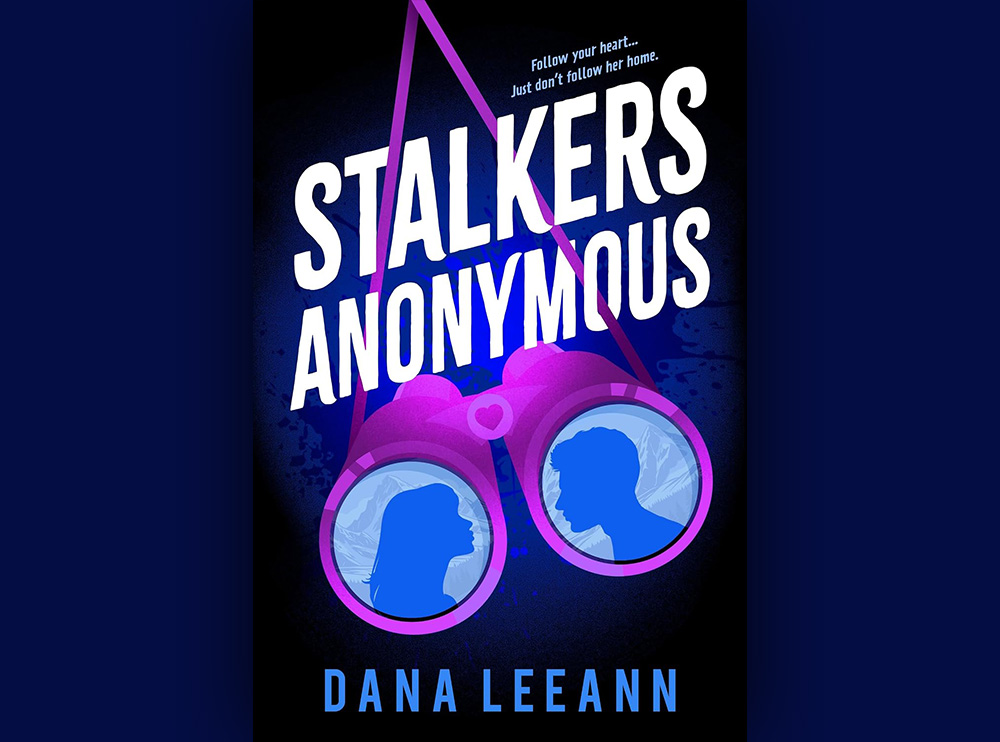
Stalkers Anonymous is a dark romance with a morally gray hero, a fierce heroine, and a found family of misfits you won’t see coming (unless they want you to).
Intrigued? Read on to discover the synopsis and an excerpt from Stalkers Anonymous by Dana LeeAnn, which is out now.
Cole Matthews definitely isn’t a stalker. Probably.
Sure, he used company resources and crossed some lines to “have a conversation” with his sister’s abusive ex. But that was a one-time thing. Now, Cole has to attend a group therapy program with a long, clinical name…but the participants? They call it Stalkers Anonymous.
Hailey Brigham is definitely dating the perfect man. Probably.
She’d love to focus more attention on Cole, the smoking hot, ex-military sweetheart whose idea of a casual second date is tandem skydiving. But a drug-seeking patient at the ER where she’s a second-year resident knows too much about Hailey’s personal life, and his fixation on her is getting harder to ignore.
When threats against Hailey escalate, Cole’s protective instincts go into overdrive. To keep her safe, he would do anything—even if it means becoming the monster he’s kept so carefully locked up inside.
EXCERPT
Chapter One: Cole
“My name is Cole. And… I’m a recovering stalker.”
The words feel like sandpaper in my throat, rough and uncomfortable. Six pairs of eyes stare back at me with a mixture of boredom, understanding, and judgment. The fluorescent lights of the Fort Collins community center basement buzz overhead, casting everyone in an unflattering, sickly yellow glow.
“Thank you for sharing, Cole,” says Tracey Doyle, the group’s therapist. She sits perfectly straight in her metal folding chair, clipboard balanced on her knees, pen poised like she’s ready to document my every breath. Her blunt-cut bob and cardigan scream “I have multiple degrees in analyzing your bullshit, and I’ll see straight through you,” but her eyes are kind. Something in my gut tells me it’s a dangerous combination.
“Since this is your first meeting with us, would you like to share a bit about what brought you to IBSG—Interpersonal Boundaries Support Group?” she asks, her voice neutral but expectant.
A tall, well-built man two seats down from her coughs into his hand, choking out “Stalkers Anonymous” like he’s correcting her. Several of the other group members chuckle, shit-eating grins plastered across their amused faces.
I don’t miss the way Tracey immediately rolls her eyes, like she’s heard this a few too many times. “This is serious, Tyler. You don’t encompass the full scope of the group’s issues by boiling it all down to one word. You’re people with boundary issues. You don’t always know when you’ve crossed a line, but that doesn’t mean you’re stalkers.” Tyler lets out a defeated sigh and sinks down into his chair, and Tracey quickly pulls the group’s attention back to me. “What brought you to us, Cole?”
What brought me here?
Simple. I got caught.
“My new employer felt it was a necessary precaution,” I say casually, keeping my answer as vague as I can. “I’m in security.”
I don’t mention Emma or her piece-of-shit ex-boyfriend.
“And how do you feel about being here?” Tracey presses, her pen scratching against her clipboard.
“Honestly? I think it’s overkill.” I lean back in my chair, its metal legs creaking beneath my weight. “I’m not some obsessed ex who can’t take no for an answer. What I did wasn’t far outside the scope of my profession.”
HR at NextGen Security was pissy about “inappropriate surveillance techniques” and “invasion of privacy” when I used company resources to track down Emma’s ex, Stephen—or, as I prefer to call him, Shitbag Steve. That fucker had the audacity to lawyer up, then sue NextGen for their part in what happened. As part of the settlement, they traded his signature on an NDA for my resignation.
One of my buddies from my army days reached out when he heard through the grapevine that I’d lost my job. Jack Morrison owns Fortress Security Systems—a smaller outfit than NextGen, but a solid company with a good reputation. We served two special ops tours together in Afghanistan, so Jack knows I’m not the type to go off the rails without good reason.
He understood what I did. Why I did it.
“Look, Cole,” he’d said over drinks at Tallon’s Pub three weeks ago, “I’ve got an opening for someone with your skillset, but I’m going to be straight with you—if you want this job, there are going to be conditions.”
Jack had already talked to his HR director prior to meeting with me. They’d done their homework, looked into what happened with Shitbag Steve, probably ran deep background checks, dotted their i’s and crossed their t’s. I can’t say I blame them.
I’d have done the same, and then some.
The job offer came with strings attached: minimum six months in a support group for people who struggle with “boundaries.”
“You get help, you get the job,” Jack said, sliding the business card for IBSG across the sticky bar table. “You don’t, and we part ways. Your choice.”
It wasn’t really a choice, though, and Jack knew it. We both did. He was sticking his neck out for me in ways that could blow back on his business to throw me a lifeline when no one else would even return my calls.
So here I am, sitting in a circle of metal chairs that screech against the linoleum floor every time someone shifts their weight, trying to figure out how to explain all of this—any of this—without sounding like I actually belong here.
A jacked guy with tousled red hair and full tattoo sleeves throws his head back and laughs. “Man, that’s exactly what I said my first day. ‘I’m not creepy, I’m just passionate about my art.’”
He leans forward, extending a gentle hand. “I’m Grant, by the way. Professional photographer.”
He leans on professional, like we both know he’s taken some distinctly unprofessional pictures, too. If having his name on a business card makes him feel good about how he uses a telephoto lens, who am I to judge?
We shake hands, though I’m unsure how to perceive him.
“We don’t judge here,” Tracey explains, practically reading my mind, “but we do hold each other accountable. Everyone in this room has crossed boundaries in ways that felt justified at the time.”
She gestures around the circle. “Why don’t we go around and introduce ourselves briefly so that Cole can learn a little bit about us? It’s been a while since we’ve had a new member. You’ve met Grant. Next to him is Tyler.”
Tyler nods at me, his light-brown face clean-shaven, his medium-brown eyes alert. “Hey. I own Elevate Brewing downtown. This is my sixth month in the program.” He doesn’t elaborate on his offense, and no one presses him. They already know, and with time, I’m sure I will, too.
“Austen,” says the next man, clearly the tallest of them all, even from a sitting position. His tweed jacket and wire-rimmed glasses give off strong English-professor vibes. “I…became invested in a student’s life.” His mouth twists. “It’s a long story.”
I bet it is.
Next is a lean guy in athletic wear who, like me, looks like he’d rather be anywhere else. “Zachary. Zach. Whatever you want to call me. Fitness coach.” He glances at Tracey, who gives him an encouraging nod. “I got fired for tracking a client’s workouts when he wasn’t with me. And for showing up on his jogging route to make sure he was running when he said he’d be. And I went to his new gym.”
He crosses his arms defensively as he shrugs. “I was just trying to help him reach his goals, but I took it too far. I needed to take a step back and realize that fitness isn’t that serious. So here I am.”
The lone woman in the group gives me a smile. She’s small compared to the men seated around her. Even Tracey towers over her. “I’m Jessica. You can call me Jess.” She tucks a thick strand of dark hair behind her ear. “I may have taken it too far trying to protect my abusive ex’s new girlfriend. I didn’t know when to quit and way overstepped.”
I nod, taking them in one at a time. They’re all normal people with normal jobs. People who blend in with everyday life.
People like me.
“The thing we all have in common,” Tracey says like she’s one of us, “is that we convinced ourselves we had valid reasons for our behavior. Protection. Artistic expression. Academic interest. Professional commitment. Love.” She lets that sink in, pausing for a longer-than-necessary dramatic effect, before she continues. “Part of recovery is recognizing that our intentions don’t justify actions that violate others’ autonomy and privacy. We have to be careful not to overstep boundaries. It doesn’t matter if they’ve already been put in place or not. Our goal here is to recognize when we’ve pushed too far, then step back without hesitation.”
I shift in my seat. “With all due respect, there’s a difference between stalking an ex and monitoring someone who’s an actual security threat.”
“Is there?” Tracey asks, her eyebrows rising just slightly. “In both cases, you’re appointing yourself the arbiter of someone else’s life without their knowledge or consent. You’re deciding what information about them you have the right to collect and what actions you’re justified in taking based on that information.”
I open my mouth to argue, then quickly close it. I can’t be argumentative. I have to be here if I want to keep my job. Nothing I say will change that. It’s better to play along and get through the required twenty-six weeks of this shit than risk losing the only job I can get right now.
“One of our core strategies here is our buddy system,” Tracey continues, licking her finger and flipping a page on her clipboard. “Each member is paired with another for check-ins between our weekly meetings. It helps with accountability and provides support during vulnerable moments when you might be tempted to fall back into addictive behaviors.”
Great. Stalker buddies. I hope we get to wear matching T-shirts.
“Tyler, would you be willing to partner with Cole?”
Tyler gives me an appraising look, then nods. “Sure. I remember how it feels to be the new guy. I’m sure I can help him fit right in.”
“Excellent. Please exchange contact information after the meeting.” Tracey glances at her watch. “Now, let’s move on to our progress reports for the week. Grant, at our last session you mentioned a situation that was triggering you. How did you handle that?”
As Grant launches into a story about a wedding he photographed, I zone out, my mind documenting details about the room and its occupants.
Because old habits die hard.
The exit door’s hinges are slightly rusted. Jessica’s keychain has a pepper spray canister and a small tracking device disguised as a decorative charm—an interesting choice for someone in recovery. Austen’s phone screen lights up three times with notifications he pointedly ignores. Tyler keeps his keys organized with a system of colored rings.
I force myself to stop, blinking several times. What am I doing? This is exactly the kind of hypervigilance that will only continue to get me into trouble.
“Cole?”
I snap back to attention. Once again, six pairs of eyes are trained on me. From the look on Tracey’s face, I get the impression it’s not the first time she’s said my name.
Straightening in my chair, I lean forward and clasp my hands as I clear my throat. “Sorry, what was the question?”
I don’t know how I’m going to make it through six months of this shit.
“I asked if you’ve identified any specific triggers that lead to you crossing interpersonal boundaries. Are there any situations or emotions that make you feel the need to gather information or track someone?”
When I don’t answer immediately, unsure what exactly she wants me to say, Tyler jumps in. “She’s asking if you know why you’re a stalker. Self-awareness and all that.”
I stare blankly between him and Tracey, who’s looking increasingly annoyed with Tyler and his insistent use of the word “stalker.” I consider deflecting but ultimately decide that a small truth might satisfy her enough to let me slip under her radar.
“Perceived threats. When I think someone might be dangerous or hiding something, I go into information-gathering mode. It’s automatic. Not something I really notice until I’ve gone too far.”
She nods. “That’s a common trigger. For your homework this week, I’d like you to document instances when you feel that impulse arise. Resist the urge to act on it. Just note the situation, the emotions you experienced, and what you did instead of gathering information.”
I’ve got an advanced degree in Intelligence Studies, eight years of military experience, and a security clearance that would make the president’s eyes water. But she wants to give me homework? Perfect.
“We’re almost out of time,” Tracey says, checking her watch after another twenty minutes or so of discussion. “Our closing ritual is simple—each person shares one boundary they commit to respecting in the coming week.”
They go around the circle, each person offering their commitment.
“I won’t look up the bride from Saturday’s wedding,” Grant says.
Only because he’ll be too busy looking up the bride from Friday’s wedding.
“I won’t adjust my brewing schedule to match when certain customers usually visit,” Tyler promises.
He won’t have to, since he likely already set a schedule with those customers in mind.
“I won’t search for my former student’s new publications,” Austen states firmly, like he’s trying to convince himself.
Doubtful. He’s going to look her up before he even gets to his car. The twitch in his fingers makes it painfully obvious how desperate he is to pick up his phone.
“I won’t drive by my client’s neighborhood,” Zach mutters.
It’s a blatant lie. We all know it.
“I won’t check anyone’s social media but my own,” Jessica says confidently. “I should probably just delete it, but…baby steps.”

She’s the only one I might actually believe. Maybe.
They all look at me, and I scramble for something that sounds sincere enough.
“I won’t……run background checks on new people I meet,” I offer, thinking it’s appropriately specific while not limiting my actual work.
Tracey nods in approval, giving me a “good enough but I’m watching you” look, almost like she’s threatening to expose my secrets to the group. She knows the truth about why I’m here—Shitbag Steve, his suit against NextGen, and the way I’m a liability to Jack’s company. She wouldn’t call me out in front of these people, would she?
“Thank you all for your honesty and commitment. Same time next week. Tyler, please connect with Cole before you leave.”
As the group disperses, Tyler approaches, phone already in hand. “Let’s exchange numbers. Fair warning—I take the buddy system seriously. I’ll check in daily, and I expect responses.”
I raise an eyebrow as he hands me his phone. I quickly type my number into his contacts. “Daily? My boss only requires me to attend weekly meetings.”
“Your boss requires you to participate in the program. Daily check-ins are part of that.”
I hand him his phone back.
“Look, Cole, I get it. You think this is bullshit. You’re not like us because you had a ‘good reason.’ We all had good reasons.” His expression turns serious. “The sooner you drop that defense, the sooner you’ll actually get something out of this.”
“I’m just trying to get through it,” I admit, tiredly rubbing the back of my neck.
“Then play the game. Answer my texts. Do the homework. Say the right things to Tracey.” He shrugs. “Or don’t, and risk your boss deciding you’re not complying with the terms of your agreement.”
Put that way, the choice is clear. “Fine. Daily check-ins. Whatever you want.”
“Good. First one’s easy—what’s your plan for the rest of the night?”
I think about it, then choose my words cautiously. “Go home, order takeout, and work on a new security protocol for a client.”
“Anything that might trigger you?”
I almost laugh, but opt for a smile instead. “I’m a cybersecurity specialist. My entire job involves monitoring people and threats.”
“You know what I mean. Personal monitoring. Anything outside of work that might get you in trouble.”
“No, Tyler. I’m not planning to stalk anyone tonight.” The word feels wrong in my mouth, foreign and harsh. I hate it.
I’m not a stalker.
I’m observant.
Protective.
Thorough.
He seems satisfied with that answer. “Good start. I’ll see you next week, Cole. Or sooner, if you need to talk.”
I walk to my car, enjoying the crisp early autumn air—a welcome change from the stifling confines of the basement. I scroll through my phone to delete the meeting from my calendar. There’s no need for a digital reminder of this place.
My thumb pauses over an icon that looks like a weather service app but is actually a monitoring program I developed to track exactly one person: Shitbag Steve.
Recovering, I told the group. It was an easy lie. I checked his location this morning.
And then several times throughout the day, making sure I didn’t miss my hourly check-in. And of course, once more as I walked into the IBSG meeting.
But they don’t know that. They don’t need to.
I stare at the app, Tracey’s words echoing in my head.
Our intentions don’t justify actions that violate others’ autonomy and privacy.
But some people forfeit their right to privacy when they hurt others, don’t they? Some threats need to be monitored. Some people need protection, whether they know it or not.
I close the app without opening it, silently cursing that one small concession to the program. I’ll check tomorrow instead, or when I get home. Whatever feels right in the moment.
Because Shitbag Steve needs to be watched.
Emma needs to be protected.
As I drive home, I map the quickest route between the community center and my apartment, looking for security cameras, traffic patterns, and potential choke points along the way. Know the terrain. Plan for the unknown. Again, old habits die hard—but I’m not convinced that’s always a bad thing. There’s comfort in knowing what’s going on around me, from geographical details to more…granular observations.
The irony isn’t lost on me: leaving a therapy group for people with boundary issues only to mentally document every detail of my surroundings. But that’s not a problem I’m trying to overcome—it’s basic situational awareness. It’s survival.
Isn’t it?