

Guest post written by Hunt The Ever Wild author s.e. kiser
s.e. kiser (they/them/any) is a transmasculine, nonbinary writer with an M.A. in English literature and a deep love of fairy tales, the Gothic, and life in all its forms. They teach first-year writing and tutor in the writing center at a public research university in the midwest while pursuing their MFA. Hunt the Ever Wild is their debut novel. You can find them at sekiser.com
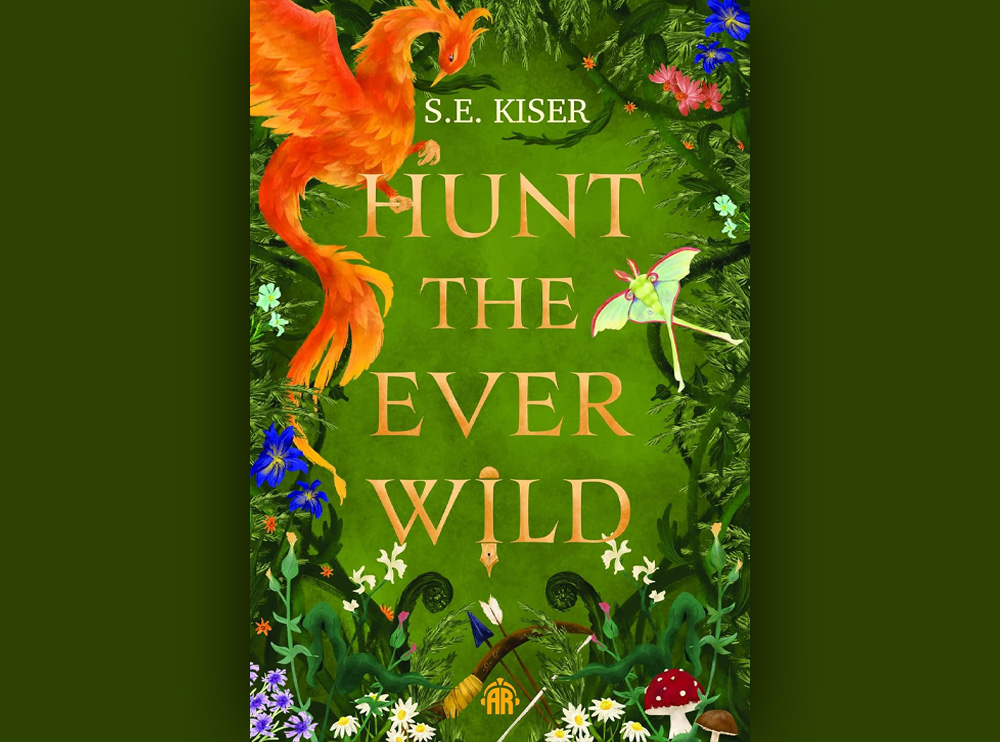
About Hunt The Ever Wild: A gothic standalone combining the gaslamp fantasy of C. L. Polk’s Witchmark with the slow-burn rivals-to-lovers romance of Isa Agajanian’s Modern Divination and the whimsy of Howl’s Moving Castle. Released June 23rd 2026.
I believe in impossible things. I kind of have to. After all, belief is the first step in making the impossible…possible.
Obviously, this helps me as a fantasy writer. Letting go of rationality and realism (while maintaining a healthy dose of skepticism and a pinch of logic) allows me to imagine the wildest possibilities, from strange creatures, to the chaotic magic of an untamed forest, to the power of love and the human spirit.
I credit my education for nurturing this ability. Growing up a queer, sensitive, and creative kid in a rural, working class town, I did not have many opportunities to feel valued for these qualities. I didn’t have the language to describe them, even to myself. I was withdrawn and awkward, depressed and suicidal. College let me leave my small town, meet people nothing like me and more like me than I could have ever imagined. It rewarded me for pursuing my interests and indulging my drive toward inquiry and analysis. I felt valued for my talents, and met faculty who recognized my skill and encouraged it. I would never have found that without going to college.
I would never have been able to afford college without student loans.
And now, it feels like I will never escape the shadow that debt has cast over my life.
In my debut gothic fantasy, Hunt the Ever Wild, aspiring artist Sylas Cassirer has always dreamed of a better life than his humble beginnings allowed him. A life in which he can meaningfully use his talent, drive, and intellect instead of feeling them waste away while he waits tables to pay rent. A life in which he has time for rest, for making art, for companionship with like-minded souls.
In pursuit of those dreams, he wins a contest held by the king. As the winner, he receives tuition to the only academy that teaches magic—an education Sy could never otherwise have afforded. The only catch is that, once he receives his wizarding license, he must work for the king until the cost of his education is paid back—with interest.
This seems like a fair trade to a nineteen-year-old barely making ends meet. Wizards in this world (called spellscribes) are well paid and highly regarded, much like doctors in ours. Magic is extremely technical and prone to mistakes, so training is complex, difficult, and expensive. Students typically come from noble families—and, typically, nobles are the only ones who can afford their services. Through intricate spells written in the spellscribe’s own blood, magic can heal the body and alter its appearance. It’s an understandably highly sought after skill, especially among a decadent elite.
But ten years later, at the start of the novel, Sy continues to live on the knife’s edge of poverty with no end in sight. Despite being excellent at what he does, he can never earn enough to cover living expenses and make a dent in his ever-increasing debt. He is physically and emotionally drained and has less time and energy than ever before. He despises the king, whose life is prolonged by magic and who is viciously cruel, and himself for doing the king’s bidding.
Then, the king proposes yet another contest: find a way to grant him eternal life. The prize is enough to finally eliminate Sy’s debt. All he has to do is survive a magical, possibly sentient forest, catch a phoenix (which may or may not be a legend), and craft an impossible, untested spell before another wizard finds it—or him—first.
In a way, Hunt the Ever Wild is my own phoenix. While writing the novel, I placed all my hopes, effort, and focus into my dream of becoming a published author. Even with two degrees, I couldn’t find a “real” job, and I wanted to be paid enough to live by doing the work I’m good at doing. It’s what we all deserve. It’s what universities promise their students.
What we’re not told, but soon learn through experience, is that a college degree is not the key to success. It’s a very expensive lottery ticket. Some of us win the lottery and score a high-paying job. Many of us, especially those of us born into circumstances which make student loans necessary in the first place, don’t.
So some of us take another gamble on highly competitive fields, where few if any ever earn a comfortable living and work is always tenuous (arts, athletics, performance). Some of us end up working whatever job we can find, no matter how ill-suited, just so we can eat and pay our bills. And some of us do hard, necessary work we’ve gladly trained to do, yet still barely manage to get by.

But that’s just life under capitalism—survival of the fittest, dog eat dog, may the best man win. Suck it up. Place your bets.
I believe we can do better.
And despite everything, I still believe in the promise of education. Because of my degrees, I’m now teaching and tutoring college writing, and while I still barely earn enough to live, I love it even more than I thought I would. I wouldn’t be here, wouldn’t be who I am, without my education, and I cherish that.
I shouldn’t have had to go into debt to find happiness, but I did. And, in an impossible way, it helped me create something beautiful: this book.
Truth be told, I don’t know if I’ll ever repay my debt. I don’t know how to justify telling my students a college degree is worthwhile financial investment, even though I’ll never stop believing learning can be a beautiful investment in our individual and collective humanity. But when I read my students’ vulnerable, compassionate, and hopeful writing, I know one thing for sure: they deserve any future they can imagine, and we owe it to them to help set their wildest beliefs free.
Sy’s education can’t save him from capitalism or the king; but deep in the forest, it comes to aid him in unexpected ways. His efforts in learning give him the skills to do the extraordinary—maybe even the impossible. In the end, though, it is his ability to believe in the impossible, to pursue it against all odds, that can save him.
And that doesn’t cost a penny.