


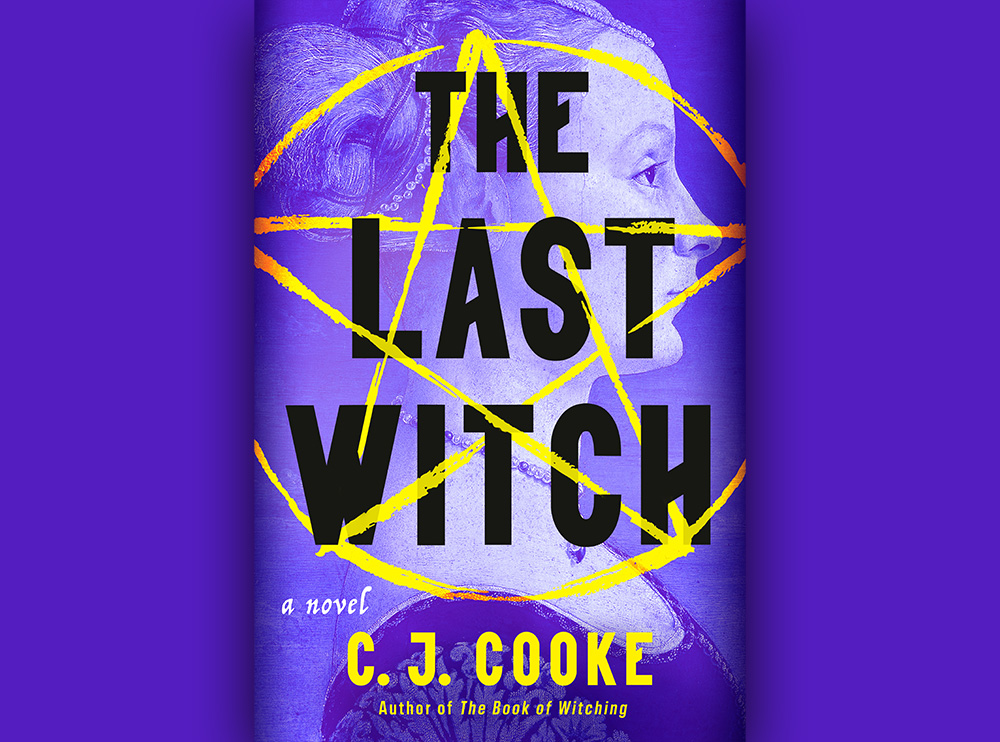
A deeply compelling historical horror novel following a woman accused of being a witch who must use her voice to fight for her life—and the truth—from the acclaimed author of The Book of Witching.
Intrigued? Well read on to discover the synopsis and an excerpt from C. J. Cooke’s The Last Witch, which is out now.
Innsbruck, 1485. Helena Scheuberin should be doing what every other young wife is doing: keeping house, supporting her husband, and bearing his children, but as an outspoken, strong woman, she sometimes has difficulty fitting in. Then she draws the unwanted attention of a malign priest who is just starting his campaign to root out “witches” from among the women of her town, and when her husband’s footman dies, she finds herself accused not only of murder but of witchcraft.
Helena must find the courage to risk her life and the lives of others by standing up to a man determined to paint her as the most wicked of all….
Based on the incredible true story of a woman who challenged a man who went on to become one of Europe’s most notorious and cruel witchfinders, this novel offers a jewel-bright portrait of female power.
1
Ravensburg, Duchy of Jülich
Holy Roman Empire
Dawn.
A yellow slab of light fall across the rooftops. A straggly crowd hems the town square, some folk behind pillared cloisters, others hanging out of attic windows. Public gatherings in Ravensburg tend to be loud, boisterous affairs, but this one is eerily quiet, the crackling of the stakes in the centre of the square travelling to the far corners of town.
To the child wearing a black hood, the hissing timber sounds like whispers.
They say, here is death…. here is death….
The child’s mother holds her hand in a firm grip, and the child can feel her trembling. Both are shivering on account of being paraded across the square in their bare feet, their bloodied kirtles no match for an Alpine wind. The hood is too big for the child’s head, and as she walks – wrists bound, raw from the chains – it slips back a little, lifting from the child’s eyes to reveal her feet and those of her mother’s.
And the leather shoes of the monk.
They stop, and the air changes. A sickening stench of smoke.
‘Remove the hoods,’ he orders, and she flinches at his voice. He is Father Kramer, and he terrifies her.
The executioner mumbles in reply. ‘We were told the heretics must be hooded, lest they…’
‘Remove them,’ Father Kramer snaps. ‘The townsfolk must be reminded that witches look like everyone else. Even little girls.’
The hood is pulled from the child’s head, a gale quickly fingering her shorn scalp. Her vision adjusts, and she sees the solemn faces of the crowd around her, a low sun creating dark hollows where their eyes should be. In front of her two stakes have been erected, long branches leaning against thick posts, orange flames licking the wood.
For a sickening moment she believes she is already in hell.
She starts to cry, holding to her mother’s arm with both hands. The other woman is a few steps ahead, dragged by the executioner. ‘Please,’ she begs, hauling her arms away from him. ‘Please.’
As the child nears the stake, the smoke thickens, filling her nostrils with a vile and choking scent. On the back of the wind there is the sound of a man sobbing, pleading. The child can’t see him, though she spies familiar faces amongst the crowd. Her neighbours, her friends, Augustin and Isolde. They play together often and yet now… It wounds her to see them stare at her, like gargoyles. And her father. He does not move to fetch her as her mother takes her towards the fires, but remains on the edges of the square, and she wants to call out to him and ask him why he stays so still, so unmoved. But her attention is on her mother. She wants to save her, to protect her from the men surrounding them.

Everything lurches with impossibility.
But then, the executioner grabs her mother by the back of her sackcloth dress and drags her whimpering to the blazing stake.
‘Please,’ her mother cries. ‘Please, no…’
The child is screaming now. Help, she cries, someone, help! How can they all stand there, the townsfolk, while her beloved mother is torn from her and thrust to the flames?
‘Wait,’ Father Kramer says. The executioner pauses, and the child feels a leap of hope. On the ground before him, her mother is sobbing and pleading for their lives. The other woman is shrieking amidst the blaze. Her hair has set alight, a crown of flames dancing brightly on her head.
‘Let them watch,’ the child hears Father Kramer say.
The executioner hauls her mother from the ground to a standing position, clamping his other hand upon the child’s little shoulder, pinning her to the spot in a firm grip. They watch silently, their faces hot from the fire, the terrifying scene draining every last ounce of fight from their bodies. She feels her mother’s fingertips on her cheek, gently pushing her face away. Do not look. But from the corner of her eye the child sees the limp figure of the woman, an arm dangling above her head like a puppet’s, snagged on a branch. Flame snarls at the skin there, the air thickening with the stench of cooking flesh.
‘Now,’ Father Kramer says, and suddenly the executioner is pushing the child and her mother towards the stake, swearing as he does at the scorching heat. The child feels terror lift her violently out of her body, the lurching knowledge that she is going to die drawing bile to her mouth. Even as her wrists are tethered to the wood she prays aloud to Saint Anthony, pleading for an angel to come and save them.
But the fire is greedy, roaring in her ears. She hears her mother crying, the cheers of the townsfolk, celebrating the riddance of witches.
She sees the face of the monk watching her, making sure the deed is done.
Excerpted from The Last Witch by C. J. Cooke Copyright © 2025 by C. J. Cooke. Excerpted by permission of Berkley. All rights reserved. No part of this excerpt may be reproduced or reprinted without permission in writing from the publisher.