


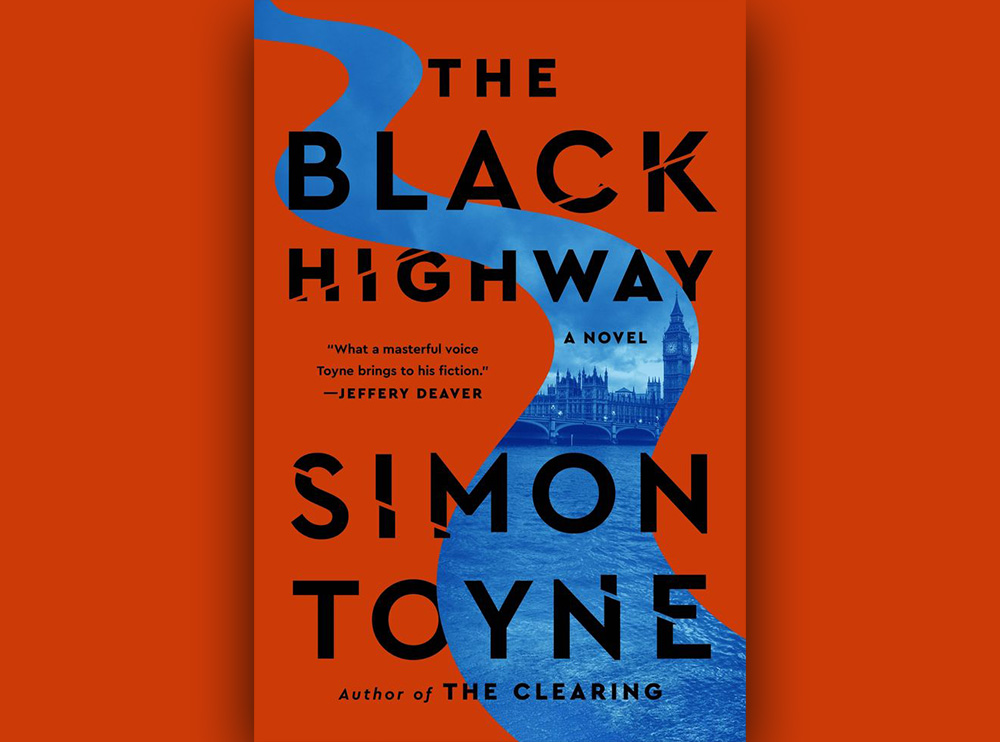
Laughton Rees is back in the latest novel from the bestselling author of the Sanctus trilogy—this time, with a case that hits uncomfortably close to home and threatens the thing Laughton values most: her daughter.
Intrigued? Well read on to discover the synopsis and an excerpt from Simon Toyne’s The Black Highway, which is out now.
Forensic specialist Laughton Rees is not ashamed of her checkered past—after all, her youthful indiscretions led to the birth of her daughter Gracie, the person she loves most in the world—but when Gracie’s father unexpectedly turns up in their lives again, Laughton is automatically wary.
Shelby Facer is a dangerous man, formerly imprisoned for his involvement in an international drug trafficking ring, and no matter what Laughton once felt for him, she doesn’t want him anywhere near Gracie. But when Shelby claims that he has information about an especially difficult murder case she is working, she can’t turn him down.
A body with no head or hands has recently turned up in the river Thames, and the police are at a loss until Shelby identifies the man. The victim was part of a highly secretive smuggling ring Shelby was involved with during his and Laughton’s youth—which Laughton’s father, former commissioner for the Metropolitan police, was investigating before he died.
Laughton throws herself into her father’s old files to try to trace the connections between past and present, but as she and DCI Tannahill Khan circle closer to the truth, the case becomes dangerously personal. When another body turns up, mutilated just like the first, the victim is no stranger to Laughton. She’ll have to face the darkest parts of her past to find the man behind the murders—before he takes away everything she loves.
CHAPTER ONE
The red evening sky and sharp lines of London reflect in the warped liquid mirror of the Thames. It looks like one of those heavily filtered images from a travel blog, or a tourist website, or it would if not for the corpse in the foreground.
The dead man lies on his back close to the river’s edge, his tailored suit still managing to look good despite the foul black mud soaked deep into the pale blue of the waterlogged wool. It is not the sort of thing some desolate street suicide would wear, the type who regularly jumped in the river to end it all, suggesting that the man falls into the other main category of river victim, the fatal accident: a drunken dare and a leap from a jetty or a party boat that quickly turned tragic. But that is not what happened here. Even from his position high on the embankment, DCI Tannahill Khan can see that much.
He works quickly, wriggling and rustling his way into a fresh paper suit as the CSI team set up screens to hide the body from the swelling crowd on the embankment. There’s an added feeling of urgency with this one, not just because of the exposed and public nature of the crime scene, but because the floater—the blunt name the river police call all bodies found in the Thames—has been discovered at low tide, and the slack, mirrored water of the Thames is already starting to buckle with the current as the water level begins to rise. In less than half an hour the spot where the body is now lying will be submerged again, along with any evidence that might be found by it.
Tannahill fastens the paper suit at the neck, sets his camera running, then heads down the steep stone steps to the riverbank, being careful to capture into evidence every worn stone stair, though he’s pretty sure neither killer nor victim would have used them. Floaters are called that for a reason, and the spot where a body is pulled from the river is rarely the same place it entered.
Tannahill reaches the muddy, gravel-and-litter-choked slope of the upper bank and holds for a slow count of ten on a wide shot of the whole scene: the body center frame, a fast-response MPU boat idling on the river a few meters from shore ready to transport the body if needed, and the London skyline rising up behind, dark and ominous, the twin tourist magnets of Tower Bridge in front of him and the Tower of London at his back.
Tannahill zooms in, steadying his hand until the image settles on the paper-suited form of the forensic pathologist hunched over the body and taking initial measurements—lividity, core body temperature—trying to establish a rough time of death to help them work out how long the body has been in the water. Getting useful postmortem readings from a floater is notoriously difficult, the near freezing waters of the Thames chilling the body rapidly and ruining all the usual scales of measurement. Even so, murder scene protocol has to be followed, and the pathologist has to finish doing their thing before he can start doing his.
He studies the paper-suited figure trying to figure out which pathologist is on duty tonight, and therefore how speedy this process is likely to be. The figure moves, almost as if sensing his scrutiny, and a darkly made-up Cleopatra eye flashes briefly in his direction before returning to the corpse. Even with the surgical mask covering most of her face Tannahill recognizes Dr. Evelyn Prior, one of the more senior officers on the roster, with a reputation for being incredibly thorough and utterly uncompromising. It won’t matter to her that the tide is rising, or that he is waiting for her to finish the primary examination. She’ll take as long as she needs, then immediately start leaning on him to release the body so she can take it away to conduct a proper autopsy.
Tannahill stops recording and taps his fingers against the side of the camera, anxious to get on with his work but powerless to speed things up. He takes a deep breath, catching the rot-and-algae-salted tang of the river at the back of his throat, then pulls his phone from his pocket. He calls a recently dialed number and looks up at the darkening sky as it starts to ring.
“Hey.” Laughton Rees answers sounding breathless, like she’s hurrying home for the evening he is about to torpedo.
“Hey,” Tannahill says. “Listen . . . something’s come up.”
“Oh.” He hears the disappointment in Laughton’s voice. “Are we talking slight delay or total write-off?”
“Hard to say. A body washed up just down the river from you.”

“On the north side, just by Tower Bridge?”
“Yes, how did you know that?”
“Bodies wash up at that spot all the time, something to do with the particular curve of the riverbank and the way the current flows. When they built Tower Bridge they actually incorporated a temporary mortuary in the foundations so they could leave the washed-up bodies there on public display to help identify them. It’s called Dead Man’s Hole.”
Tannahill smiles. He loves the fact that Laughton knows so many macabre things about so many macabre subjects. They have been seeing each other for nearly eight months now, but he is still constantly impressed and beguiled by her. “Can you imagine if we still did that today?” he says. “Lined up murder victims on the side of the road for people to gawp at?”
“We do,” Laughton replies, “it’s called the internet. If Dead Man’s Hole was still a thing, someone would stick a webcam on the place with the hashtag #doyouknowthisperson.”
Tannahill glances up at the crowd on the embankment, their phones held aloft as they try to get a glimpse of the body, some undoubtedly live streaming. “Yeah, well,” he murmurs into his phone, “sadly a public identity parade would not be much help with this particular body.”
“Really, how so?”
Over at the river’s edge Dr. Evelyn Prior finally stands up and step away from the body, giving Tannahill his first close and clear view of it, lying in the mud in its expensive suit — only with no head, and no hands.