

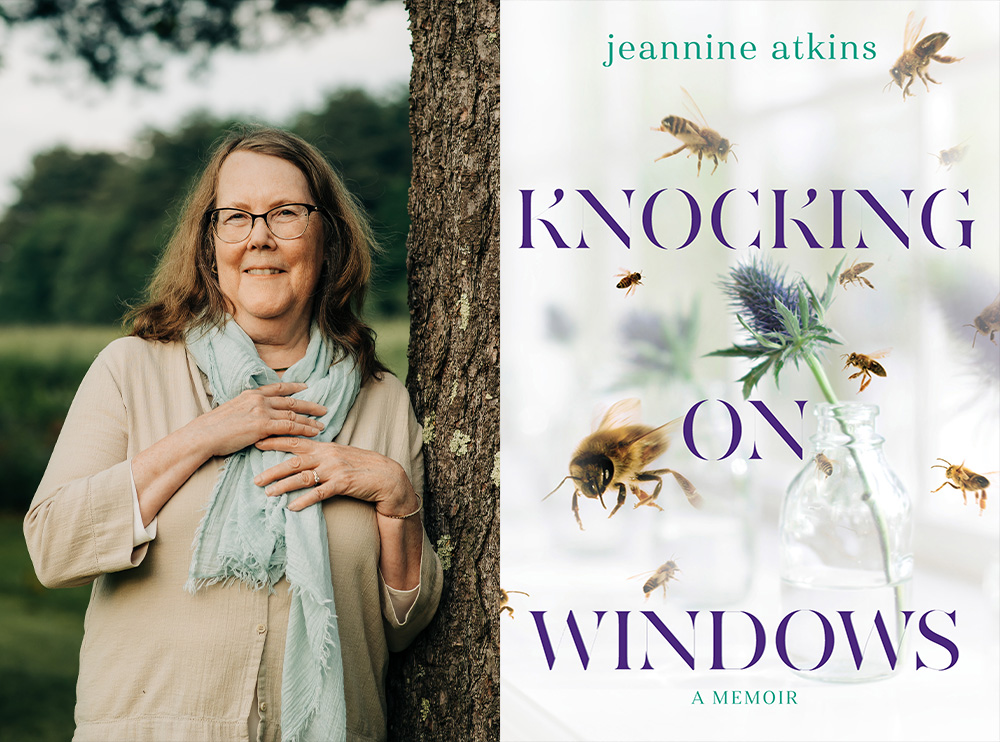
Acclaimed author Jeannine Atkins joins The Nerd Daily to discuss her recent memoir-in-verse book Knocking on Windows, which is a brave and powerful memoir-in-verse about memory, healing, and finding her voice as a writer.
Jeannine Atkins is the author of several books for young readers about courageous women, including Finding Wonders: Three Girls Who Changed Science, Grasping Mysteries: Girls Who Loved Math, Stone Mirrors: The Sculpture and Silence of Edmonia Lewis, and Borrowed Names: Poems about Laura Ingalls Wilder, Madam C.J. Walker, Marie Curie, and Their Daughters. Jeannine teaches writing for children and young adults at Simmons University and lives in western Massachusetts.
Perfect for fans of Amber Smith and Speak, Knocking on Windows is a deeply moving meditation on not only surviving and thriving after sexual assault but also on reading and writing. We asked about revisiting her past through her writing, her writing process for the memoir, her journey, and more.
CONTENT WARNING: Knocking on Windows is about Jeannine’s experiences as a rape survivor. The rape isn’t described in graphic detail, but the scene itself and much of the book is emotionally intense.
What made you decide to write this book in poetry in verse format rather than in traditional memoir format?
Most of the book revolves around who I was when starting college, and back then, the sometimes intimate, sometimes fierce, voices I found in poetry had more impact on me than prose. Also, I was in part writing about memory, which so often comes in fragments and without obvious connections, and a series of poems reflected that best.
What made you decide to write Knocking on Windows now in today’s world, and how has this process helped you move on, if it has?
To write a memoir that takes on rape as a theme, you may have to be angry. I came of age thinking that life and laws were getting fairer for women and people who’d long lived with injustice, and thought my story was history that didn’t have to be told. After a sexual abuser was elected president, my story seemed all too relevant to today’s world. Telling my story helped me feel deeper pride in the woman I became and compassion for those in the midst of similar struggles.
What was the process like for you to revisit these memories that took place in college, and for you to put them to pen to paper?
I cringed or cried while writing some memories, and resisted facing others, but the process made me feel powerful, too. For so long, much of me had felt unseen, and I was glad to put part of who I was on paper. I set myself the task of writing about both trauma and beauty, a sometimes teetering balance I admired in poems by Maya Angelou, Sylvia Plath, and others. Making space for both grief and joy seems the best way to approach not only writing but life.
You use literature as a way to move on and as a beacon of hope. What advice would you give to young women who have experienced their own sexual assault?
Give yourself time, which I’m so sorry is longer than we wish, and as much tenderness as you can muster. In Knocking on Windows, I state, “To write is to find the courage to claim that we matter.” You can start with any word. Find and listen to anyone who reminds you that your voice is wanted and needed.

Were there any poetry in verse memoirs and/or particular authors that helped you write Knocking on Windows?
I still love poets like Maya Angelou, Emily Dickinson, and Adrienne Rich who I loved many years ago, but also like the mix of compressed language and a longer story found in verse narratives. Verse memoirs I’ve loved include Brown Girl Dreaming by Jacqueline Woodson, Ordinary Hazards by Nikki Grimes, and Shout by Laurie Halse Anderson. In the verse novel, Blood Water Paint, Joy McCullough powerfully and poignantly shows the heritage of necessary rage.
Is there anything else you want to discuss?
These are hard days, and it’s natural and sometimes necessary to look for ways to escape the world. But I also hope you know that looking danger in the eye can stir a sense of power you didn’t know you held. You aren’t alone.