


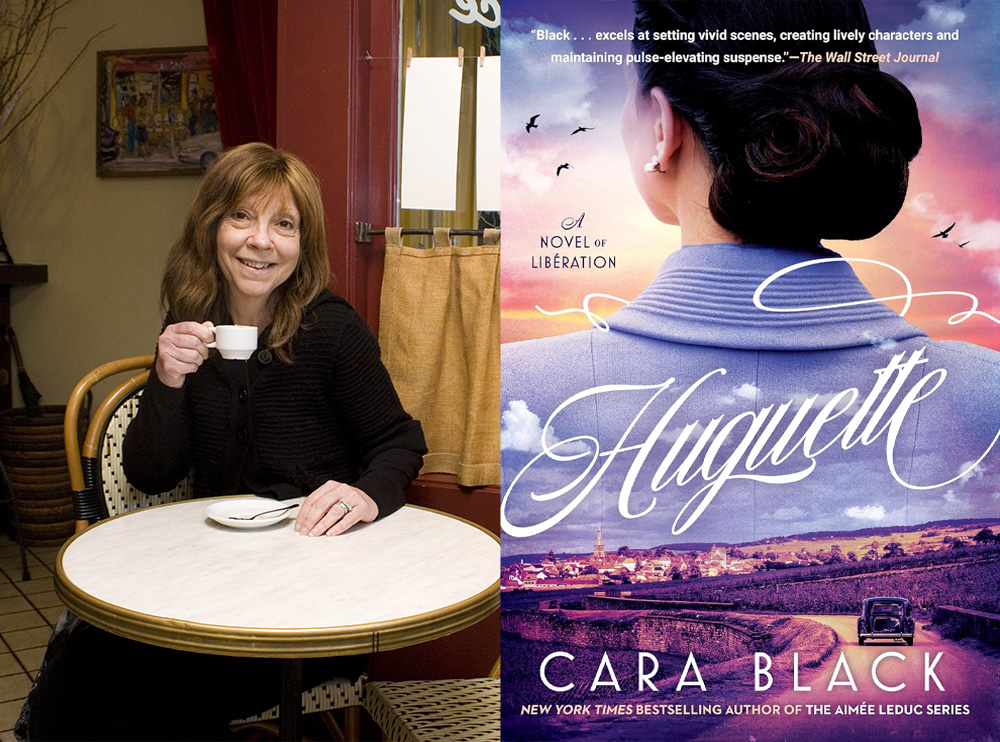
We chat with author Cara Black about Huguette, which is set in the lawlessness of post–World War II France where a resilient young woman fights to survive and make a living, no matter the cost.
Hi, Cara! Can you tell our readers a bit about yourself?
Hello, Nerd Daily! I live in San Francisco and get to Paris whenever I can. I’m a long time Francophile and I love connecting with readers. The best part of my writing job is that I get to go to Paris, where I stay with friends and get to do research. After writing, I take long walks; while clearing my mind, it also helps me to find new story ideas.
When did you first discover your love for writing and stories?
Probably from my grandfather, who was a storyteller and had no TV, who’d tell me stories and I’d beg for more. When I got my first library card, I realized that stories were told in books, which opened my eyes to the possibility of writing them down and sharing them with more people.
Quick lightning round! Tell us:
- The first book you ever remember reading: ELOISE IN PARIS by Kay Kendall
- The one that made you want to become an author: PROMISE AT DAWN by Romain Gary
- The one that you can’t stop thinking about: BEL CANTO by Ann Patchett
Your latest novel, Huguette, is out now! If you could only describe it in five words, what would they be?
A novel of Libération, Paris.
What can readers expect?
Readers can expect twists, turns, shocks, tears, resilience and a poignant journey in this saga of survival with Huguette.
Where did the inspiration for Huguette come from?
I saw an old photo of Libération in Paris taken from the window of a coiffeur, hairdresser; as the hairdressers looked down over the street, in the background were German soldiers marching with their hands up in surrender. Another inspiration was my friend’s mother who lived in Paris during that time and often talked about how hard it was surviving after the war with continued rationing—and how movies were an escape. When I tried to research on my own, I saw how little had been written about this era. This sparked me to explore the post-War period and the challenges faced by the French, in particular within the film industry.
Were there any moments or characters you really enjoyed writing or exploring?
I loved writing about Claude Leduc, the grandfather of my series detective Aimée Leduc. Claude, a rookie homicide detective in Paris, navigates post-War police politics and, like a dog with a bone, won’t give up on a case. This leads him through murky waters and finding his way into starting his own agency. He’s a bon vivant, haunts the auction houses, and loves to cook, too, which endears me to him.

Did you face any challenges whilst writing? How did you overcome them?
Since the backdrop of the story is Huguette’s time at a famous film studio on the outskirts of Paris, and since the French are so known for their love of film (after all, France originated cinema), it was important to me to get the depiction of this industry right. I actually went to the old studio, which is very changed now, and to Lyon to explore where the Lumiere brothers made one of the first silent films. For me, it’s important to walk the ground, visit the places, imagine what it was like in the past, and find the unseen details. Hopefully this made my story richer.
What’s next for you?
The working title is Leduc Detective. It deals with Aimée Leduc uncovering long-lost family secrets to do with an art treasure and the May 1968 student demonstrations at the Sorbonne. It’s exciting for me to connect some of my books together in a way that might be surprising to readers.
Lastly, what books have you enjoyed reading this year? Are there any you’re looking forward to picking up in 2026
I loved Sasha Vasilyuk’s book Your Presence Is Mandatory about her grandfather, a Ukrainian WW2 veteran. Also books in Rhys Dylan’s detective series set in Wales featuring Inspector Evan Warlow. I’m looking forward to reading The Correspondent, which we picked for my book group.